
5 Emergency Troubleshooting Steps
Table of Contents
It’s 105°F outside, the house is heating up fast, and your air conditioner is either blowing warm air or making a sound you’ve never heard before.
Don’t panic. Many AC problems have a simple cause you can check yourself in about 15 minutes. Others are warning signs that your system needs a professional right away.
In this guide, the Arrow Appliance Heating & Air Conditioning team walks you through 5 safe troubleshooting steps, plus a quick guide to what those strange noises actually mean.
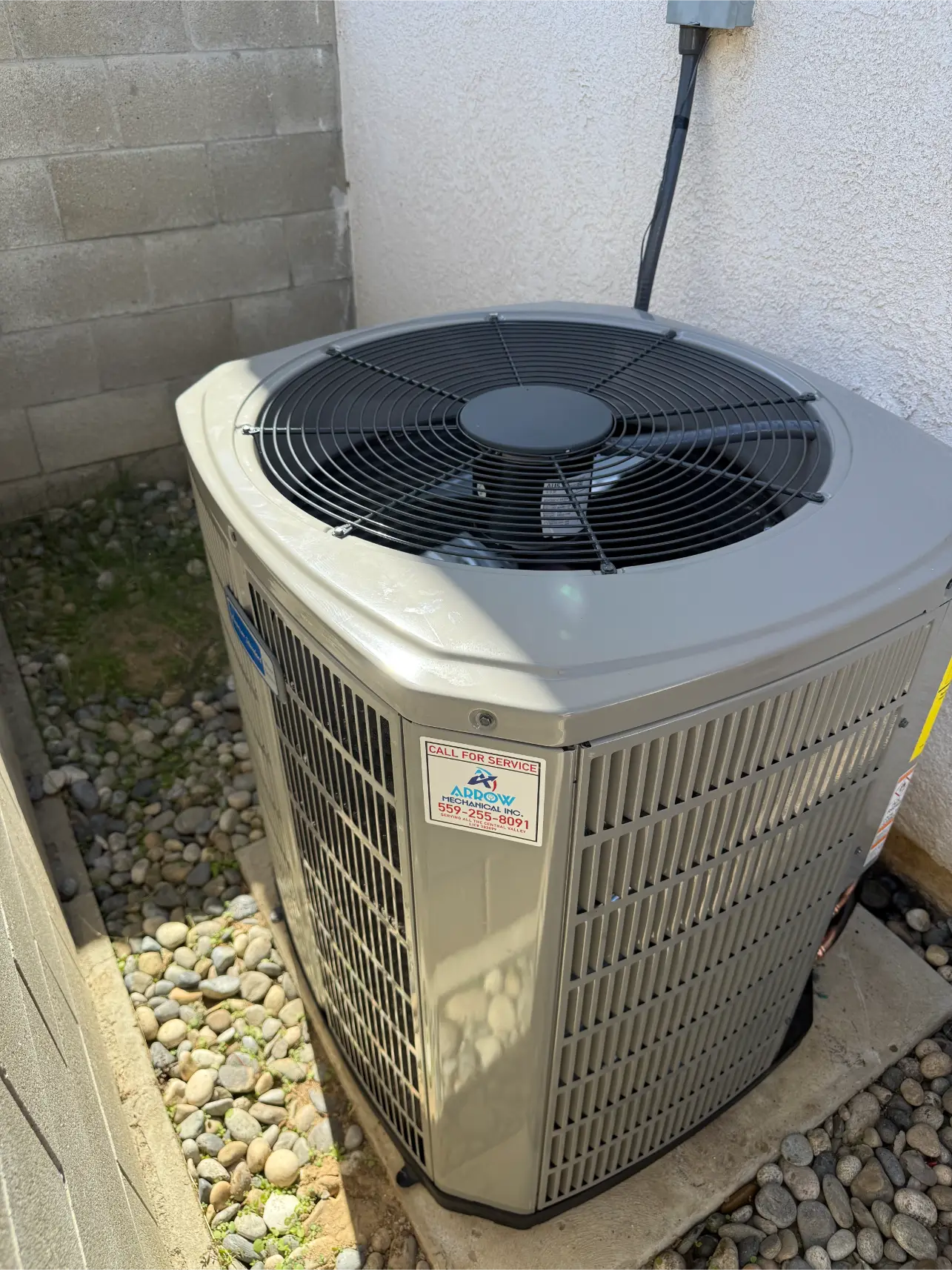
Safety First: What NOT to Do
Central Valley air conditioners work harder than almost anywhere else, so problems are common. Before you start, keep these rules in mind:
- Never open electrical panels on the outdoor unit or furnace.
- Never add refrigerant yourself. Handling it requires EPA certification.
- Don’t keep resetting a breaker that trips again and again.
- Don’t run the system if you smell burning or see smoke.
If you smell burning plastic or hear loud banging, turn the system off at the thermostat and call a professional. That’s not a DIY situation.
Step 1: Check Your Thermostat
It sounds too simple, but the thermostat is one of the most common reasons an AC “stops working.”
Check that:
- The system is set to COOL, not HEAT or OFF.
- The fan is set to AUTO. On “ON,” the fan keeps blowing even when the system isn’t cooling, which can feel like warm air.
- The temperature is set at least 3–5 degrees below the room temperature.
- The screen is on. If it’s blank, replace the batteries.
If your thermostat is old or unreliable, a smart thermostat installation gives you more accurate control and can lower your energy bills.
Step 2: Replace the Air Filter
A clogged air filter is the number one cause of poor cooling in the Valley.
When the filter is packed with dust, air can’t move across the indoor coil. The system works harder, cools less and can even freeze into a block of ice.
- Turn the system off at the thermostat.
- Find the filter in the return grille or next to the indoor unit.
- Hold it up to the light. If you can’t see through it, replace it.
- Install the new one with the arrow pointing toward the unit.
In the Central Valley, check your filter every month during summer. Dust, pollen and smoke clog filters much faster than the package says.
See ice on the copper lines? Leave the cooling off and run the fan for 2–3 hours to thaw it. If it freezes again, you may have low refrigerant or an airflow problem. Our ductwork and ventilation services find the leaks and restrictions that keep cool air from reaching your rooms.
Step 3: Check the Breaker and Disconnect
Your AC usually has two breakers in the main electrical panel: one for the outdoor unit and one for the indoor unit.
- Look for a breaker in the middle or “off” position.
- Flip it fully OFF, then back ON.
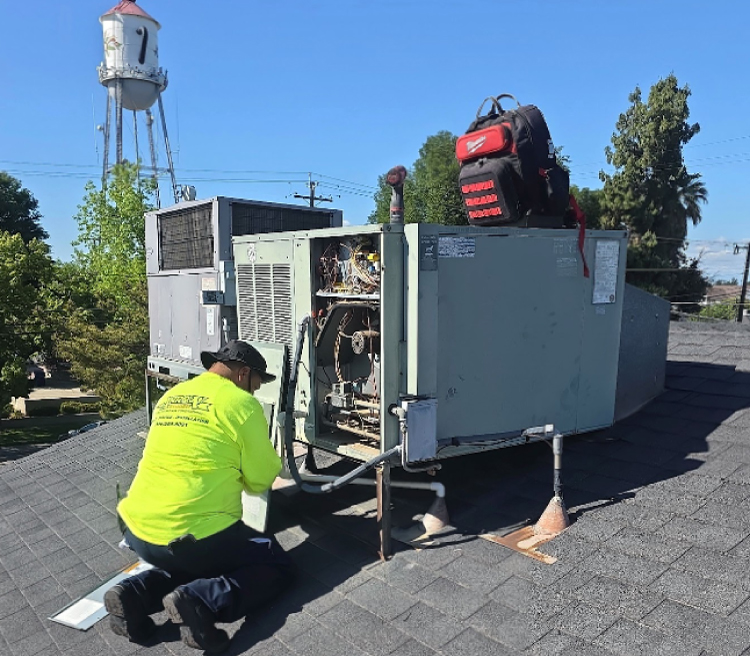
- Check the disconnect box on the wall next to the outdoor unit and make sure it’s on.
Wait about 5 minutes before turning the AC back on. Many systems have a built-in delay to protect the compressor.
A breaker that trips once may be a fluke. A breaker that trips twice is a warning sign. Stop resetting it and call a technician.
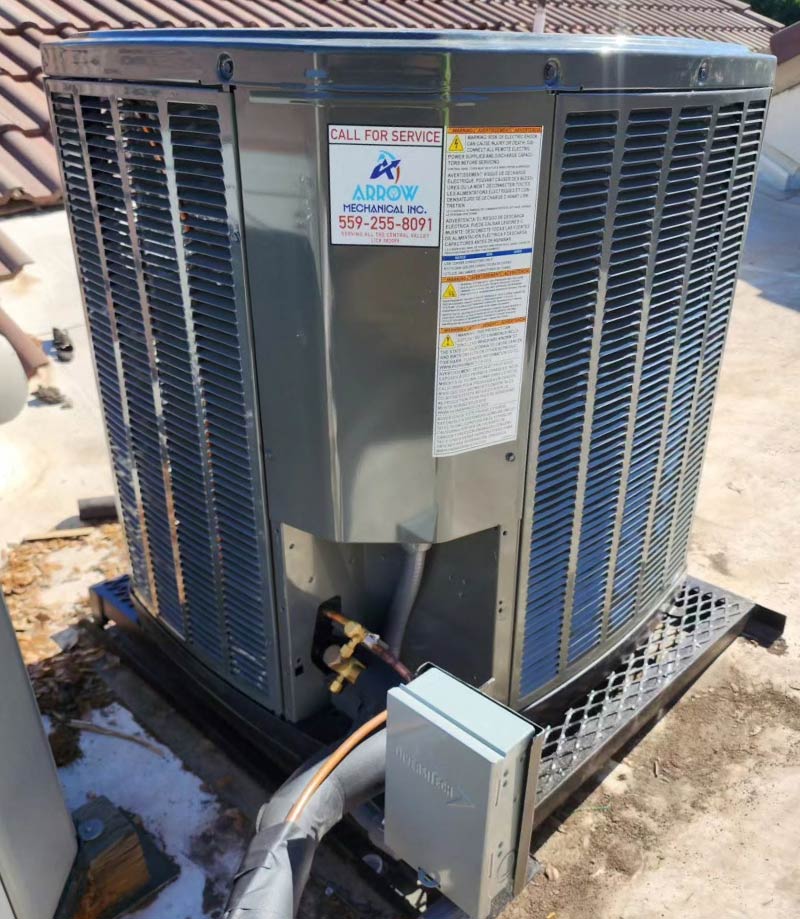
Step 4: Inspect the Outdoor Unit
The outdoor unit releases the heat pulled out of your home. If it can’t breathe, your house won’t cool down.
- Is the fan spinning? If the unit hums but the fan doesn’t move, a capacitor or fan motor may have failed.
- Are the coils clean? Leaves, grass clippings and dust can coat the fins.
- Is there 2 feet of clear space around it? Trim back plants and move stored items.
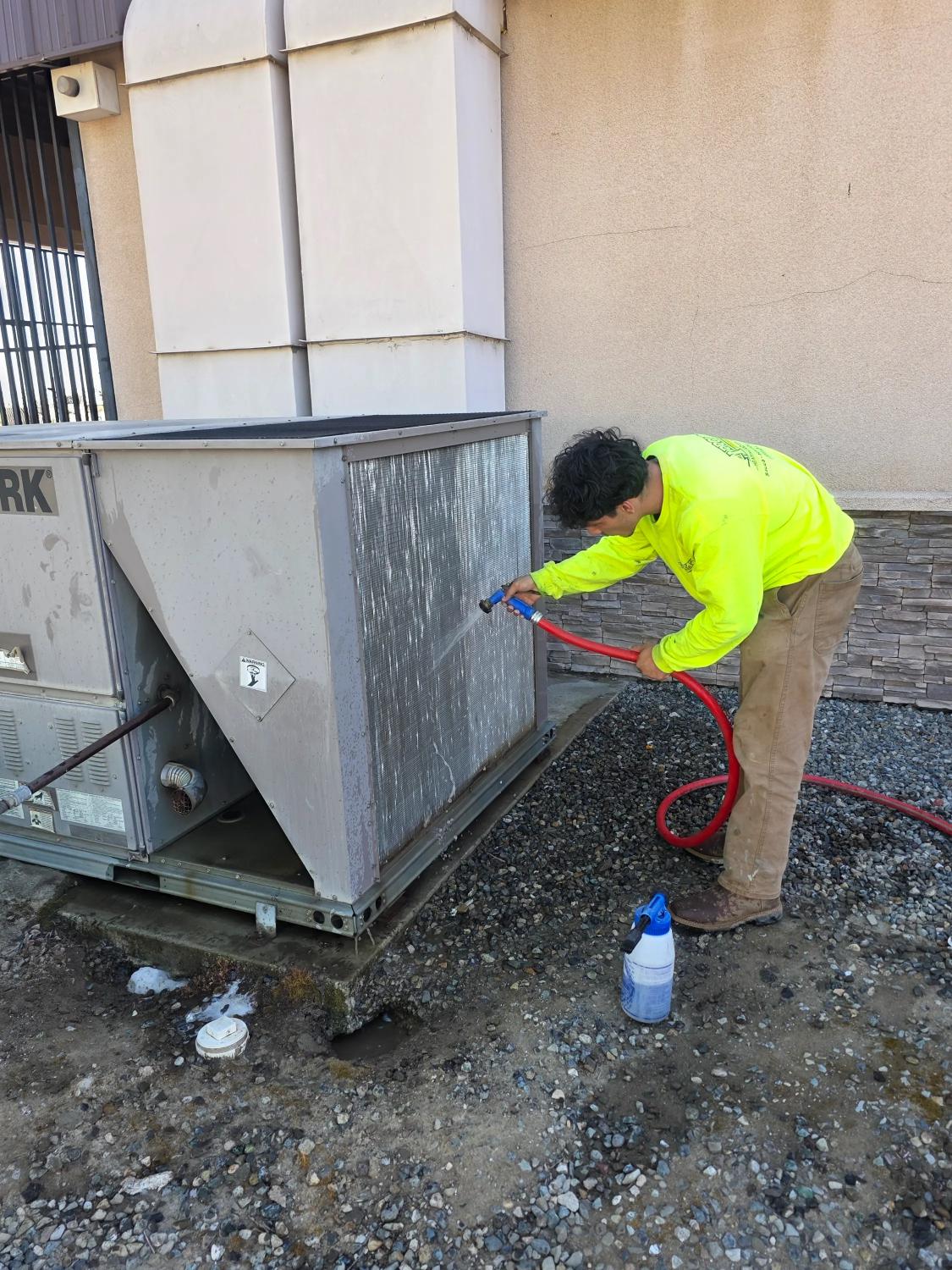
With the power off, gently rinse the coils with a garden hose. Never use a pressure washer, because it bends the thin metal fins.
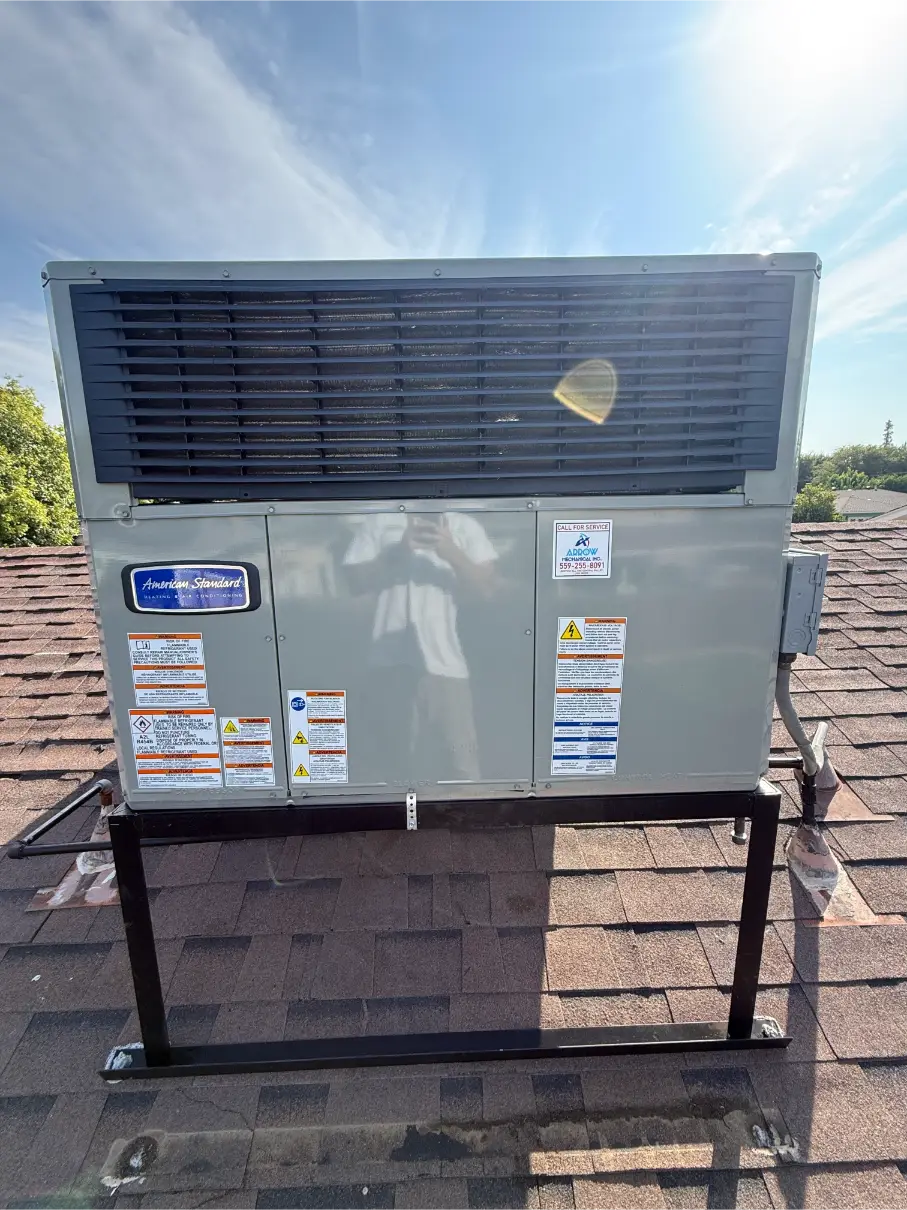
Step 5: Identify the Noise
Strange sounds are your AC’s way of telling you something is wrong. Note whether the noise comes from the indoor or outdoor unit, then use this table:
| Noise | Likely Cause | What to Do |
|---|---|---|
| Banging or clanking | Loose or broken part, possibly in the compressor | Turn it off and call right away |
| Screeching or squealing | Worn fan motor or belt | Schedule a repair soon |
| Grinding | Failing motor bearings | Turn it off to avoid more damage |
| Hissing or bubbling | Possible refrigerant leak | Call a certified technician |
| Buzzing or humming | Electrical issue or bad capacitor | Call a technician; don't touch the unit |
| Rapid clicking | Faulty relay or control board | Check the thermostat, then call |
| Gurgling or dripping | Clogged condensate drain line | Check the drain pan for water |
Have a ductless system? If your mini-split is louder than usual, leaking water or not cooling, see our mini-split repair services.
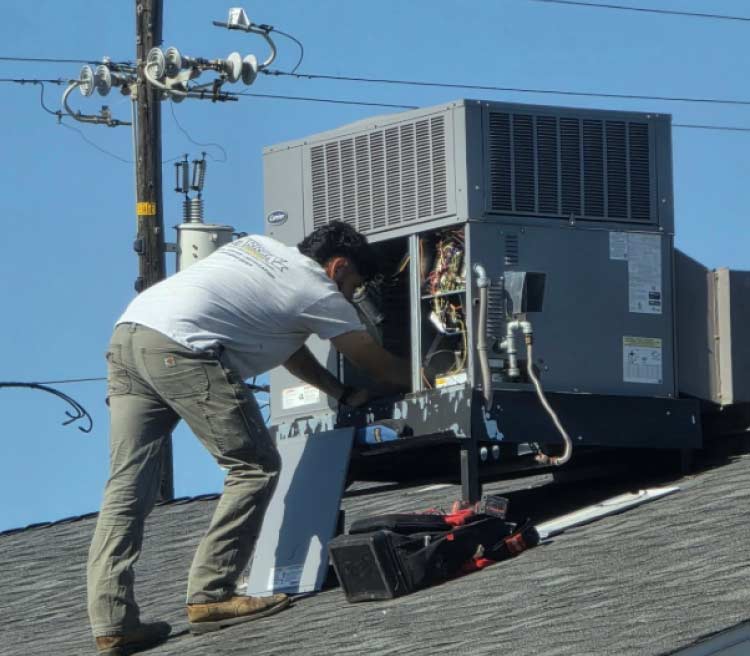
When to Call for Emergency AC Repair
If you’ve gone through all five steps and your AC still isn’t cooling, it’s time to call a pro. Some situations shouldn’t wait at all:
| Call Right Away | Schedule a Repair Soon |
|---|---|
| Burning smell or smoke | AC runs nonstop but barely cools |
| Loud banging or grinding | Higher-than-normal energy bills |
| Breaker trips repeatedly | Some rooms much warmer than others |
| No cooling in extreme heat with seniors, babies or pets at home | System is 15+ years old and struggling |
How to Prevent the Next Breakdown
Most emergency calls we get in July and August could have been avoided with a spring tune-up. A few habits make a big difference:
- Change your filter every 1–2 months in summer.
- Keep the outdoor unit clear of plants and debris.
- Keep vents open and unblocked by furniture.
- Schedule maintenance once a year, ideally in spring.
Our AC tune-ups and preventive maintenance catch small issues before they become a breakdown on the hottest day of the year.
Frequently Asked Questions
Why is my AC running but blowing warm air?
Is it safe to run my AC if it's making a strange noise?
How often should I change my AC filter in Fresno?
Need Help Now? Call Arrow
Since 1976, families from Fresno to Visalia have trusted Arrow for honest, accurate and reliable HVAC service.
If your AC isn’t cooling or is making strange noises, don’t wait for it to get worse.